
Press Releases
Destruction of Palestinian National Identity: Colonial curricula and “open source” learning
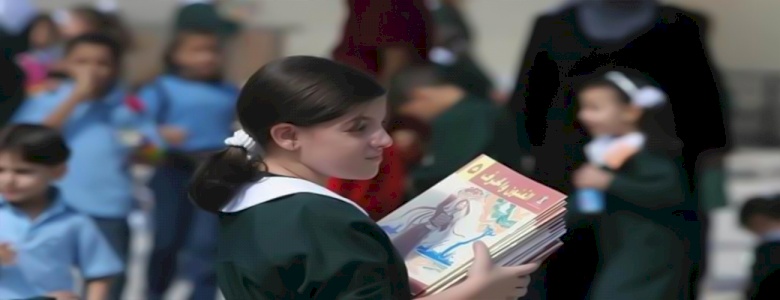
(Bethlehem, 7 August 2026)
It is no longer a secret that the successive amendments made by the Palestinian Authority to the Palestinian curriculum over the past ten years came in response to the demands of the European Union (EU), the United States, and the Israeli colonial-apartheid regime. The Palestinian Ministry of Education's decision to adopt the “open source” system today represents another link in the chain of subjugation to the conditions of the Palestinian Authority's funding, especially EU funding. The justifications and propaganda that are being made - such as the desire to develop and modernize the education system with the aim of marketing this program - are an attempt to hide colonial suppression. The global experiences of colonized peoples reveal that the modernization of educational curricula according to colonial standards is a colonial policy aimed at suppressing these peoples, destroying their national identities, and controlling their consciousness to consolidate colonial domination. As South African militant Steve Biko said, “The most potent weapon in the hands of the oppressor is the mind of the oppressed.”
BADIL is currently conducting in-depth research that monitors the changes (amendments) made to the Palestinian curriculum from its completion in 2006-2007 to today. This research will trace the progression of colonial pressure on the Palestinian Authority and its gradual concession. The list of Israeli-imposed amendments became an essential part of the PA reform process, continued funding, and, as with the case of France and others, for recognition of the “State of Palestine.”
The targeting of the Palestinian curriculum is not new, and was addressed by BADIL in working paper #26, Israel’s Apartheid-Colonial Education: Subjugating Palestinian Minds and Rights. The paper monitored some curricula modifications based on the list of changes prepared by the "Institute for Monitoring Peace and Cultural Tolerance in School Education" – Impact-se, a Zionist-Israeli institution. Impact-se demanded more than 470 changes to the Palestinian curriculum, claiming that it is racist, inciting anti-Semitism and violence, and does not promote peace, tolerance and coexistence. The EU and other Western countries adopted the report and included it in their decisions, linking the PA's funding to the condition of making the required changes. In exchange for funding, clear changes have been made to the Palestinian curriculum since 2018. However, these changes did not meet the requirements of the Israeli regime and its European allies. The e-learning page, where the Ministry of Education lists the study materials for grades 5-10, does not include social studies and Islamic education, which, in addition to Arabic, are the focus subjects of the imposed colonial amendments.
As for the “open source” education system, it exempts the PA from preparing and providing a printed, standardized and detailed curriculum; transferring the burden of education to teachers and parents through the so-called sequential package system for the foundational first four school grades. This exemption conceals the PA's responsibility for curriculum amendments that affect Palestinian rights, obscures the colonial context and facts on the ground, and eliminates everything that contradicts the Zionist narrative. By adapting “open source,” the PA can’t be held accountable for its failure to bring about changes to the curriculum in accordance with colonial criteria. In addition, this education model necessitates high-capacity requirements in resources, equipment, facilities, staff and technology.
Years after its adoption and implementation, both Sweden and Denmark have taken significant measures to return to traditional learning methods – rather than digital platforms and e-learning systems - citing evidence of the system's educational and social pitfalls. Under colonial machinations, “open source” curricula are unable to build a common national identity, culture and values, especially for peoples facing oppression and colonialism. Sweden, an independent country that does not suffer from colonialism, and with the capacities and resources needed to provide all the necessary infrastructure, equipment, and training has acknowledged the failure of the system and returned to printing the curriculum in unified paper books. This is a crucial indicator for the PA and the Ministry of Education to review its recent decision to impose this learning system.
Claiming that the switch to open source is the modernization of the Palestinian curriculum or its adaptation to the United Nations Educational, Scientific and Cultural Organization (UNESCO) standards is misleading. In the case of the Palestinian curriculum, Impact-se’s application of UNESCO's principles are selective, fraught with colonial underpinnings, that disregard and legitimize Israeli colonial aspirations. The UNESCO’s principles and the Declaration on the Granting of Independence to Colonial Countries and Peoples (1960) do not call for acceptance and coexistence with the oppressor/colonizer, but explicitly call for respect for the right of generations in colonial countries to learn about their history and rights in order to strengthen their identities and achieve their independence.
A national curriculum that does not include the Nakba, displacement and refugees; Zionist -Israeli colonialism, apartheid, and other crimes; racism, the heroism of martyrs and prisoners; the rights to struggle, return to one's original homeland, and self-determination along many other issues, may bring in temporary funding but will destroy a people and their identity forever.
Therefore, BADIL and the Global Palestinian Refugee and IDP Network (GPRN) call on:
- The Palestinian Authority and the Ministry of Education to cancel the decision to adopt the “open source” system, and to end the adaptation of the Palestinian curriculum to meet Israeli demands through the so-called amendments, by erasing and/or replacing lessons, phrases, verses, pictures, and drawings connected to Palestinian identity and history.
- National bodies, educational institutions and their staff, and parents to defend our children's right to education, including learning about the history, struggle and rights of the Palestinian people