
Are They Really New Refugees? The Hidden Reality Behind the Wall
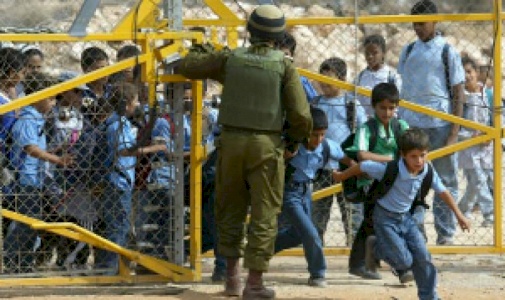
In September 2003, the UN Special Rapporteur on the situation of human rights in the occupied territories warned that the construction of the separation (‘apartheid’) wall in the West Bank is creating a new generation of refugees and displaced persons.1 The UN and local non-governmental organizations estimate that nearly a quarter of a million Palestinians will be affected by phase one of the wall in the northern West Bank.2 This number is likely to more than double as the wall snakes around Jerusalem and winds its way down through the southern West Bank.
The wall is generally viewed as another tool of Israel’s ongoing
military occupation. Bringing down the wall has become a symbol for
ending that occupation. The request by the UN General Assembly to
the International Court of Justice (ICJ) in 2003 for an advisory
opinion about the legal consequences of the wall and the subsequent
ruling of the court six months later are also limited to the 1967
occupied Palestinian territories. There is, however, another hidden
reality, which brings into question the very assumption that the
wall is only about the occupation.
Who are the newly
displaced?
Approximately two-thirds of those affected in some degree by phase
one of the wall are non-refugee Palestinians. The remaining third
are 1948 refugees – i.e., those Palestinians who were displaced
from their homes and villages and sought temporary refuge in parts
of Palestine that did not become part of the state of Israel.
Phase one, which runs from Salem checkpoint in the northwest Jenin
district, through Tulkarem and Qalqilya governorates, to Masha
village in the Salfit area, created nine so-called enclaves – i.e.,
areas isolated by the wall. This includes five enclaves west of the
wall with 14 communities and four enclaves immediately east of the
wall. The UN estimates that another 33 communities further to the
east will be affected in some way due to the loss of land,
irrigation networks, and infrastructure.
More than 220,000 people will be affected in some degree by phase
one of the wall. Approximately six percent (13,636 persons) are
located in enclaves west of the wall of whom 1,870 are 1948
refugees. Sixty-three percent (138,593 persons) are located in
enclaves on the east side of the wall. This includes 67,250 1948
refugees. The population of other affected communities is 69,019
(31 percent) of whom 7,355 are 1948 refugees.
Of those persons who have been affected in some way by the wall –
i.e., inability to access lands, businesses, schools, clinics and
hospitals, and maintain family ties – the Palestinian Central
Bureau of Statistics (PCBS) estimates that more than 2,000
households or nearly 12,000 persons had been displaced from
localities that the wall passes through. According to the mayor of
Qalqilya, 4,000 people have left the city because of the wall. Not
all persons, however, are physically displaced by the direct
construction of the wall.
Refugees or internally displaced
persons
At first glance, it would seem that Palestinians who have been
displaced in the West Bank as a result of the wall are internally
displaced persons. The defining characteristic of internally
displaced persons is that they have not crossed an internationally
recognized border. While the international community does not
recognize the route of the wall as an international border between
Israel and a future Palestinian state, the question that has to be
asked is whether the wall creates a de facto border that, in
effect, creates refugees rather than internally displaced
persons.
Israel has argued that the wall is temporary in nature designed
solely for security reasons. UN observers question this premise.
Commenting on the wall one year ago (September 2003), UN Special
Rapporteur John Dugard observed that, “the Wall has all the
features of a permanent structure. [Emphasis added] The
fact that it will incorporate half of the settler population in the
West Bank and East Jerusalem suggests that it is designed to
further entrench the position of the settlers. The evidence
strongly suggests that Israel is determined to create facts on the
ground amounting to de facto annexation.”3
This permanent structure includes walls and fences, gates and
crossing points monitored by Israeli soldiers, and a permit system
under which all Palestinians residing in so-called enclaves or
wishing to enter such enclaves require special permission from the
Israeli military administration. Israelis do not require permits to
enter these zones. According to UN reports, Israeli soldiers while
explaining new procedures for entry into enclaves in the northern
part of the West Bank have, on several occasions, referred to these
enclaves as ‘Israel.’4
In short, the wall appears to have all the trappings of a de
facto border between Israel and the West Bank. Palestinians
residing in the nine enclaves created by phase one of the wall have
a special residency status that is different from Palestinians
living in other areas of the West Bank. Those Palestinians who are
physically displaced from these enclaves and those who live outside
the enclaves but are unable to access their lands would appear in
practice to be refugees rather than IDPs. While the first have, in
effect, ‘crossed a border’, the latter case it is the ‘border’ that
has crossed the refugees.
The determination of whether Palestinians displaced by the wall are
refugees or IDPs is important insofar as it determines the relevant
protection regime and mechanism. Refugees fall within the
provisions of the 1951 Convention Relating to the Status of
Refugees. UNHCR is mandated to protect Convention refugees. Due to
the unique circumstances of the Palestinian refugee issue, and the
interpretation of UNHCR’s mandate in UNRWA’s area of operations,
however, there is no mechanism to provide protection to refugees in
the West Bank, including those displaced by the wall.
Internally displaced persons do not fall within the scope of the
1951 Refugee Convention. There is no convention that sets out the
rights of IDPs and concomitant obligations of states, although the
non-binding 1998 Guiding Principles on Internally Displaced Persons
do provide universal guidelines for IDP protection. Unresolved
issues of UN mandate and institutional responsibility for internal
displacement, however, continue to hamper effective provision of
international protection of IDPs. No single agency is recognized as
having an explicit mandate to provide international protection for
internally displaced persons.
Occupation or ethnic cleansing?
What is little known about those communities affected by the wall
is that, in addition to refugee and non-refugee Palestinians, they
also include Palestinians who lost land and means of livelihood in
1948 (i.e., village lands fell on the ‘Israeli’ side of the 1949
Armistice Line or ‘Green Line’) but were not displaced from their
homes and villages, persons displaced internally as a result of the
1967 war, and villages who have lost land to Israeli colonies over
the past 37 years. In other words, this is not the first time that
many of those affected by the wall have lost their land and means
of livelihood.
Approximately one-third of those villages affected by the first
phase of the wall were separated from large parts of their lands by
the 1949 Armistice Line. This includes three villages located in
enclaves west of the wall, five villages in enclaves on the east
side of the wall, and another 13 villages that are not (yet)
enclosed by the wall, but will lose land and suffer other damages
as a result of the construction of the wall. At least one locality
experienced major internal displacement in 1967 and most have lost
land to Israeli colonies. Team building, Coaching and Executive
search - PrimumEsse.lt
Estimated Land Lost in
1948-49, Villages affected by Phase One of the
Wall
|
Jenin
|
Non-Refugee
|
Refugee Families
|
Land Lost in 1948-49
(dunums*)
|
|
Barta’a Sharqiya
|
3,404
|
150
|
9,435
|
|
Rumane
|
3,186
|
313
|
9,740
|
|
Anin
|
3,514
|
54
|
3,730
|
|
Zububa
|
2,007
|
243
|
11,746
|
|
Tannik
|
1,035
|
34
|
27,306
|
|
Zabda
|
785
|
19
|
360
|
|
Total
|
13,931
|
831
|
62,317
|
|
|
|
|
|
|
Tulkarem
|
|
|
|
|
Baqa
ash-Sharqiya
|
3,869
|
140
|
36
|
|
Nazlat ‘Isa
|
2,366
|
50
|
17
|
|
Faroun
|
3,016
|
80
|
2,429
|
|
Qaffin
|
8,263
|
107
|
13,060
|
|
Deir
al-Ghusun
|
8,942
|
117
|
12,932
|
|
‘Attil
|
9,831
|
330
|
108
|
|
‘Ilar
|
6,503
|
70
|
154
|
|
Zeita
|
2,971
|
120
|
4,767
|
|
Kafr
Jammal
|
2,415
|
21
|
5,589
|
|
Kafr
Sur
|
1,185
|
12
|
2,059
|
|
Total
|
49,361
|
1,047
|
41,151
|
|
|
|
|
|
|
Qalqilya
|
|
|
|
|
Qalqilya
|
41,616
|
3,900
|
16,107
|
|
Hable
|
5,725
|
44
|
4,159
|
|
Kafr
Thulth
|
4,062
|
27
|
1,450
|
|
Jayyus
|
3,078
|
23
|
58
|
|
Falamya
|
658
|
5
|
7
|
|
Total
|
55,139
|
3,999
|
21,781
|
|
Grand Total
|
118,431
|
5,859
|
125,249
|
Sources: “Palestine Arab Town and Village Lands
outside the Territory Occupied by Israel under the General
Armistice Agreements of 1949,” Appendix V, in Sami Hadawi,
Palestinian Rights and Losses in 1948. London: Saqi Books,
1988, pp. 224-228; The Impact of the First Phase of the Barrier on
UNRWA-Registered Refugees.
* One
dunums = 1,000 sq. meters.
Of those villages that lost land in 1948 and are affected by the
wall, there are 118,431 persons of whom 5,859 are refugee families.
In other words, more than fifty percent of Palestinians affected by
the wall are from villages that already lost land to Israel due to
the location of the 1949 Armistice Lines.
This hidden reality challenges the underlying assumption that the
wall is only about the Israeli occupation of the West Bank. In
reality, the wall must be seen as part of a systematic process that
has pushed more than half of the Palestinian people outside of
their historic homeland, leaving another twenty percent displaced
inside Israel and the 1967 occupied Palestinian territories. One
has to ask exactly who is pushing who into the proverbial sea.
In his most recent report to the Commission on Human Rights, John
Dugard clearly spelled out three objectives of Israel’s separation
wall: (1) to incorporate settlers within Israel; (2) to confiscate
Palestinian land; and, (3) to encourage an exodus of Palestinians
by denying them access to their land and water resources and by
restricting their freedom of movement.5 These three
objective describe Zionist policy towards Palestinians since the
movement decided to establish a Jewish state in Palestine more than
a century ago.
This fact is often missed by those who campaign against the
construction of the wall. Understanding this hidden reality raises
the question of whether it is really possible to bring down the
wall and end the occupation without addressing the very nature of
Israel itself.
Terry Rempel is coordinator of
information and research at BADIL.
Notes
1 Report of the Special Rapporteur of the Commission
on Human Rights, John Dugard, on the situation of human rights in
the Palestinian territories occupied by Israel since 1967,
submitted in accordance with Commission resolution 1993/2 A,
E/CN.4/2004/6, 8 September 2003.
2 See, generally, reports of the UN
Relief and Works Agency for Palesti