
War Crimes: The Case Against Ariel Sharon
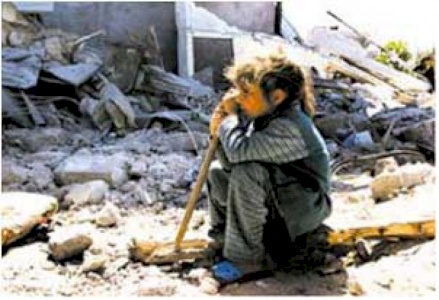
The complaint brought against Ariel Sharon before the Belgian judiciary on behalf of survivors of the Sabra and Shatila massacre was delayed in early September until an appeal submitted by the lawyer representing the Israeli government on behalf of Sharon could be heard. Belgian civil rights lawyer Michele Hirsch, who was hired by the Israeli government is asking the investigative judge to drop the case on grounds that Sharon has already been the subject of a judicial procedure in Israel, i.e. the Kahan Commission.
The lawyers representing the plaintiffs argue that the Kahan Commission did not have judicial validity to impose sanctions, it was not a court and could not convict anyone. Moreover, the lawyers maintain that only a party involved in the suit can intervene in the case; the government of Israel is not named in the suit. At press time, reports from Belgium indicate support from Brussel's public prosecutor for rejecting the appeal.
Interestingly, Hirsch previously represented the victims of four Rwandans who were convicted of genocide using the same law under which the case against Sharon was filed. According to one of the lawyers who worked on the Rwandan trial, it was Hirsch who pressed for enactment of the law that enables suspected war criminals from other countries to be tried in Belgium. Hirsch also charged that the Belgian defense minister was responsible for the genocide in Rwanda because he sent Belgian troops there who did not do anything to stop the slaughter.
Since the complaint was filed in Belgium, Belgian authorities have come under pressure to amend the law in order to raise the threshold for submission of cases thereby limiting the number of complaints filed. This included suspending the admissibility of a complaint filed against a head of state, prime minister or government minister until after he or she leaves office. For the time being, however, the Belgian government has deferred debate on the amendments.
Since the complaint was filed, Elie Hobeika, former intelligence chief of the right-wing Christian militia (Phalange) stated his willingness to testify in the Belgian lawsuit. Hobeika was named by an official Israeli inquiry in 1983 as the man who ordered the killings of Palestinian refugees in the Sabra and Shatila camps. Hobeika is not named explicitly in the current complaint, although it does refer to other Israelis and Lebanese responsible for the massacre, rapes, killings and disappearances of the civilian population At the same time, the Israeli Foreign Ministry has begun mapping out the criminal justice systems of European countries to identity states where Israeli officials might face legal action. While the official complaint is winding its way through the Belgian legal process, numerous mock war crimes trials of Ariel Sharon have been staged in the Middle East. In addition, the Swedish city of Yotburi hosted the first symbolic trial for Ariel Sharon in Europe on 4 September 2001, organized by Swedish and Arab non-governmental organizations, Swedish parliamentarians and politicians.
|
Testimony from a survivor of Sabra and Shatila, The
Complaint Against Ariel Sharon I asked him where our friends were, he replied that they had taken the girls and asked me to help him, but I couldn't rescue him and I went straight back home with my brother. Maher immediately told my father that there was a massacre. I found out from our neighbour that the Phalangists were there. When my father found out, he said that we had to stay inside the house. Our neighbour was also there. We stayed in the house all night long. On Friday morning my brother Bassam and our neighbour climbed up to the roof to see what was happening, but the Phalangists spotted them straight away. A few moments later, around 13 men knocked on the door of our house. My father asked who they were, they said, "Israelis." We got up to see what they wanted; they said, "You're still here," and then they asked my father if he had anything. He said he had some money. They took the money and hit my father. I asked them, "How can you hit an old man?" Then they hit me. They lined us up in the living room and they started discussing whether or not to kill us. Then they lined us up against the wall and shot us. Those who died died; I survived with my mother. My brothers Maher and Ismail were hiding in the bathroom. When they [the soldiers] left the house, I started to call my brothers' names; when one of them replied I knew he wasn't dead. My mother and my sister were able to escape from the house, but I was incapable. A few moments later while I was moving, they [the soldiers] came back, they said to me, "you're still alive?" and shot me again. I pretended to be dead. That night I got up and I stayed until Saturday. I pulled myself
along crawling into the middle of the room and I covered the
bodies. As I put out my hand to reach for the water jug they shot
at me immediately. I only felt a bullet in my hand and the man
started swearing. The second man came and he hit me on the head
with his gun; I fainted. I stayed like that until Sunday, when our
neighbour came and rescued me. |
World Conference Against Racism (WCAR): "Ending the Ongoing Nakba
The third world conference to combat racism and racial discrimination, held in Durban, South Africa between 26 August and 9 September 2001, brought together youth, non-governmental organizations (NGOs), and governments from around the world in parallel fora to hammer out a declaration and program of action against racism.
The NGO forum, which preceded the government conference, was organized around a series of issue-specific thematic commissions, supplemented by individual workshops and daily demonstrations and events by victims of racism around the world. The NGO Declaration and Program of Action, drafted and approved by some 3,000 NGOs from around the world is an inclusive document, grounded in international law, which boldly names theperpetrators of racism and sets out a clear program of action to combat racism.
As regards Palestinians, the Program of Action calls for measures to enforce international law, end Israel's military occupation, and deploy international protection forces. Significantly, the NGO document addresses racism and racial discrimination related to the root causes of the Palestinian-Israeli conflict, including the denial of the right of return of Palestinian refugees and internally displaced persons to their homes and properties.
Supported by nearly every other caucus, the Palestinian and Arab
caucuses also succeeded in removing a controversial paragraph
inserted by the (Zionist) Jewish Caucus, which described "charges
of genocide, war crimes, crimes against humanity, ethnic cleansing
and apartheid, [against Israel] as a virulent contemporary form of
antisemitism". This paragraph, if adopted, would have meant that
any human rights critique on the State of Israel could be labeled
as "antisemitism". Unity and solidarity, embodied in the
conference
slogan "United to Combat Racism: Equality, Justice and Dignity,"
ensured that the voices of the victims of racism would be heard
through the platform provided by the NGO forum.
This included both spontaneous and well-organized demonstrations. In one of the largest marches, the Durban Social Forum, including the South African Palestine Solidarity Committee, organized a mass march and rally to raise the demands of the landless in South Africa and the demands of the Palestinian people. Some 60,000 people participated in the march, which ended with a rally where South Africans announced the launch of an international antiapartheid movement against Israel's brand of apartheid.
For many NGOs, and not just Palestinian NGOs, it became clear that the content of the government document would be severely comprised and highly politicized when UN High Commissioner for Human Rights Mary Robinson initially refused to accept and relay the NGO Declaration and Program of Action, adopted through a legitimate, transparent and democratic process, to government representatives. While Robinson acknowledged that there were some "good things in the NGO Declaration" she noted that she could not accept some of the language in relation to Israel, particularly the reference to genocide, which she characterized as hurtful.
The High Commissioner did not provide any legal arguments as to why the term was inappropriate under international law in reference to the 1982 Sabra and Shatila massacre, which various UN bodies, including the General Assembly and Commission on Human Rights, have deemed to constitute an act of genocide. While the complete text of the government declaration and program of action have yet to be released, excerpts suggest that, unlike the NGO Declaration and Program of Action, many of the voices of the victims of racism have been severely drowned out by the political discourse that dominated the government sessions.
Concerning Palestinians, the government declaration expresses "concern" about the "plight of the Palestinian people under foreign occupation" and recognizes the right to self-determination as well as the right of refugees to return to their homes and properties and concludes with a general statement of support for the "peace process." Unlike the 1978 and 1983 government declarations, it does not include express reference to racist practices and racial discrimination suffered by Palestinians. It is not only weaker than the NGO document, but is also much weaker than the previous government documents.
In the absence of a government document, which reflects the experiences of the victims of racism, clearly identifies racist practices and racial discrimination, and which names the perpetrators of these acts, the NGO document is the only benchmark for an inclusive, non-discriminatory program of action to eliminate racism and racial discrimination. The challenge for NGOs around the world will be to find creative and effective methods to use the document and the network established at the NGO forum as a springboard for a global solidarity movement to fight racism and racial discrimination.
Given the resistance by certain governments to address
historical and contemporary forms of racism and racial
discrimination, and
attempts by the Office of the UN High Commissioner for Human Rights
to discredit parts of the NGO declaration, the unity and solidarity
exemplified by the victims of racism in Durban will be critical to
the success of any global solidarity movement.
Declaration by South Africans on Apartheid Israel and
the Struggle for Palestine (excerpts)
"We, South
Africans, extend our hands to the heroic people of Palestine.
Theirs is the struggle, slingshots in hand, of David against
Goliath. Theirs is the vision of a country shorn of racist
dominion. Theirs is the passion for life without oppression. Theirs
is the struggle, Arab and Jews to be free from discrimination and
injustice. As South Africans we understand these struggles, visions
and passions. We support the demand to isolate Apartheid Israel,
the right of return of millions of Palestinian refugees and the
dismantling of racist settlements. We pledge ourselves to be part
of a new International Anti-Apartheid movement against Israel."