
Ending the Ongoing Nakba,A Real Alternative to Oslo
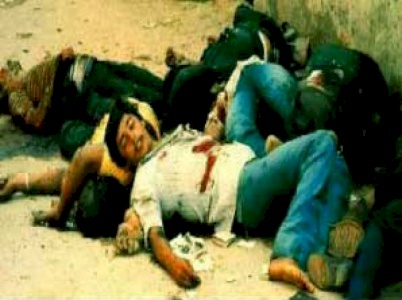
One year after the outbreak of the al-Aqsa intifada on 29 September 2000, intensified diplomatic efforts by the United States and the European Union are being applied against Israel and the Palestinian leadership to implement the Tenet cease-fire plan and the Mitchell Committee recommendations.
Conventional wisdom suggests that these renewed efforts are related, in part, to: 1) the US-led campaign to create a coalition (including Arab/ Muslim states) for what has been labeled as the new "war against terrorism"; as well as, 2) the opportunity afforded by adjustments in foreign relations to press both parties to "calm the situation on the ground" in the 1967 occupied Palestinian territories. The question that remains unanswered,however, is what is the endgame or objective of these intensified US/EU efforts, and, is there an alternative?
Tenet/Mitchell/Oslo - A Flawed Process The Tenet cease-fire plan and the Mitchell Committee recommendations comprise the backbone of joint US, EU, and UN efforts over the last 12 months, starting with the Sharm al-Sheikh summit in October 2000, to get Israelis and Palestinians back to the negotiating table. The process consists of a series of graduated steps, starting with the much talked about on-again/offagain Peres-Arafat meeting finally held in late September; followed by the implementation of a cease-fire plan mediated by CIA Director George Tenet (consisting of a series of graduated steps); intended to lead to the implementation of the Mitchell recommendations (also a series of graduated "confidence-building" measures); and, finally, the Oslo process - i.e., political negotiations concerning a durable solution to the conflict.
Both the Tenet plan and the Mitchell recommendations, however, contain fundamental flaws, which harbor the poten tial of reproducing the delays, seemingly interminable negotiations, loss of confidence in the political process on the ground, and breakdowns between negotiators that have characterized the Oslo process from the start.
First, the plan and recommendations suffer from the same kind of so-called constructive ambiguity that led, in part, to the collapse of the Oslo process. In order to reach an agreement acceptable to both parties, the text of Tenet and Mitchell is intentionally vague. The terms, "incitement," "violence," and "terrorism," for example, are not defined nor are the conditions of the settlement freeze recommended by Mitchell.
The danger of "constructive ambiguity" for Palestinians, particularly given the selective use of the terms incitement and terrorism in relation to Palestinians (often encompassing legitimate means of resistance to occupation), is that Israel, as the dominant party, will interpret and implement the plan and recommendations as it sees fit. In this context, the settlement freeze (i.e., a total cessation of settlement activity), one of the primary measures designed to rebuild Palestinian confidence in the process, appears unlikely to come to fruition.
Secondly, neither Tenet nor Mitchell include an independent, international mechanism to monitor and enforce implementation of the agreements mediated by the US and EU over the past 12 months. This runs contrary to repeated recommendations by the High Commissioner for Human Rights, the UN Commission of Inquiry, leading international human rights NGOs, not to mention the G-8 foreign ministers themselves to deploy international protection/observer forces. At best, Israel may accede to a US/EU proposal tabled earlier in the summer of 2001 comprising a handful of "officebased" officials from the US State Department, CIA, and Pentagon (and perhaps a few European officials). This type of monitoring body would be weaker than the Temporary International Presence in Hebron (TIPH), which, while not able to intervene or release information to the public, at least has had a presence in the street.
Third, both Tenet and Mitchell lack reference to the principles and concomitant requirements of international law as affirmed in UN resolutions. International law provides an objective framework, which is critical in the context of bitterly contested political conflicts. The lack of reference to international law and UN resolutions in relation to the legitimacy of Palestinian resistance to Israel's occupation of the West Bank and Gaza Strip, the illegality of Israeli settlements, and as a framework for refugee rights if and once the parties get back to the negotiation table, weakens these agreements and greatly increases the risk of short and long-term failure. Finally, even if the international community was able to facilitate the implementation of the ceasefire and Mitchell recommendations according to a clearly defined timetable, there remains the larger question of what happens when the parties get back to the Oslo process. These same problems:
"constructive ambiguity", lack of an independent,international monitoring/enforcement mechanism, and, the lack of reference to principles of international law also bedeviled the Oslo process. Moreover, post-Camp David/Taba analysis indicates a significant gap between the positions held by Israel and the PLO on major issues, including the right of return, restitution, and compensation of Palestinian refugees. Over the past 12 months this gap has seemingly become even wider.
An Alternative to Oslo?
The danger of returning to an entrenched and interminable "peace
process" - what Ariel Sharon has referred to as a long-term
interim arrangement - characterized by the continued erosion of
Palestinian rights and the opportunity for a just and durable
solution to the Israeli-Palestinian conflict lends weight to the
urgent need for a real alternative to Oslo. It is, after all, the
experience of the last 10 years under the Oslo process,
characterized by continued settlement construction, land
confiscation, house demolition, ongoing detention of Palestinian
political prisoners, siege (military closure), economic decline,
and marginalization of the refugee issue, that gave rise to the
al-Aqsa intifada.
Such an alternative should be clearly based on international law
and UN resolutions, provide for an independent, international
monitoring and enforcement mechanism, and address root causes of
the conflict - i.e., displacement/expulsion, dispossession,
occupation and denial of the right to self-determination.
The NGO Declaration and Program of Action from the World Conference Against Racism held in Durban, South Africa in August 2001 provides a framework for such an alternative. The eclaration affirms the right of the Palestinian people to self-determination, statehood, independence and freedom, and the right of return as stipulated in UN resolution 194. The Plan of Action calls upon the United Nations and state parties to effect the immediate enforcement of international law. Specifically, the Plan calls for: 1) the implementation of the rights of Palestinians inside Israel regarding lands, absentee property, uprooted villages and unrecognized villages; 2) the dismantlement of Jewish settlements, a complete Israeli withdrawal from the occupied Palestinian territories, and the immediate deployment of an independent, effective international protection force for Palestinian ivilians; and 3) implementation of the right of return, restitution, and compensation for Palestinian refugees, repeal of discriminatory lgislation concerning citizenship and land which prevent Palestinian refugees from exercising their rights, and international protection under the auspices of the UN High Commissioner for Refugees until such time as they are able to exercise their rights in accordance with UN Resolution 194.
The Program of Action also calls for the establishment of a war crimes tribunal to investigate and bring to justice those who may be guilty of war crimes, acts of genocide and ethnic cleansing; the dissemination of information to raise awareness of the root causes of the conflict through relevant UN institutions, including education packs for schools and universities, films and publications; the establishment of a UN Special Committee on Apartheid and Other Racist Crimes Against Humanity perpetrated by the Israeli Apartheid regime; and the establishment of programs and institutions to combat racist media distortion, stereotyping and propaganda, including the demonizing and dehumanizing of the Palestinian people as violent and terrorists.
The Program also calls upon the international community to impose a policy of complete and total isolation of Israel as an apartheid state, including mandatory and comprehensive sanctions and embargoes, and the full cessation of all links between all states and Israel. Based on the experience of South Africa's struggle against its own unique form of apartheid, and the success of the NGO Forum in Durban, a united grassroots, solidarity campaign that extends beyond national, religious, and ethnic boundaries will be critical to sustain and advance such an alternative.
Just as the US and the EU have stressed that their new "war on terrorism" is not a war against the Arab world or against Islam, so to this campaign is not a campaign against Jews or Judaism, but a campaign against the systemic, ongoing violations of human rights that gave rise to and sustains the Palestinian/ Arab - Israeli conflict. Despite the lack of effective intervention by the US, Europe and the United Nations based on international law and UN resolutions, in general, and over the last year of the al-Aqsa intifada, in particular, effective lobbying will be required also at the governmental and UN level.
This should include, as recommended by the NGO Forum in Durban, a call to restructure the UN Security Council to address the imbalance in voting powers, permanent and non-permanent membership to ensure equity in the decision making process. Over the past year, in particular, the US has misused its veto in the Security Council repeatedly to block efforts to deploy independent international monitors in the 1967 occupied territories. It should also include a call for additional protocols to human rights conventions to guarantee the right of persons to file individual and collective complaints and allow for enforceable sanctions. Over the past several years, numerous UN committees that monitor implementation of human rights conventions have called for changes in Israeli law and practice concerning discrimination against Palestinians inside Israel, violation of human rights that result from Israel's military occupation, and denial of the right of refugees to return to their places of origin inside Israel. These recommendations remain unenforced.
One year of Israel's brutal response to the al-Aqsa intifada, nearly 10 years of Madrid/Oslo, more than 30 years of military ccupation, and more than 50 years of mass displacement and dispossession, have resulted in an ongoing Nakba for the Palestinian people. Now is the time for an alternative. Now is the time to start mapping out how to put the principles into action, the next step on the road to return and self-determination.